
¿La pregunta por la técnica aburre?
| Hoy | Enero | Febrero | Marzo | Abril | Mayo | Junio | Julio | Agosto | Septiembre | Octubre | Noviembre | Diciembre |
| 2025 | 2024 | 2023 | 2022 | 2021 | 2020 | 2019 | 2018 |
| Superlista 2026 |
Sí se estudia desde la izquierda como crítica a Silicon Valley pero "nadie" nos dice o se da cuenta que "todo esto" es la culminación de Nietzsche. Los norteamericanos son sus discípulos más aventajados.
| Sr. D. Fr. Zeferino González |
Discurso en la Real Academia de Ciencias Morales y Políticas
Madrid, 3 de junio de 1883 | |
| Clave Geopolítica |
España, Spengler y el destino histórico de Europa
España: El hundimiento Hispanidad: La disolución de los pueblos | |
| Liberalístico |
Así se crearon las escuelas medievales: las 7 artes liberales y el origen de la escolástica
|
Bibliografía académica: Educación antigua y medieval: Marrou, Henri-Irénée — Historia de la educación en la Antigüedad (Rialp) Riché, Pierre — Educación y cultura en el Occidente bárbaro (Gedisa) Riché, Pierre — Las escuelas y la enseñanza en la Edad Media (Akal) Le Goff, Jacques — Los intelectuales en la Edad Media (Gedisa) Verger, Jacques — Los hombres del saber en la Edad Media (Gedisa) Renacimiento carolingio y escuelas: McKitterick, Rosamond — La época carolingia (Crítica) — Carlomagno (Crítica) Brown, Peter — El mundo de la Antigüedad tardía (Akal) Soto Rábanos, José María — La enseñanza en la Edad Media Artes liberales y transmisión del saber: Jaeger, Werner — Paideia: los ideales de la cultura griega (FCE) Hadot, Pierre — ¿Qué es la filosofía antigua? (FCE) Kaster, Robert — Guardianes del lenguaje (Akal) Grant, Edward — Dios y la razón en la Edad Media (Akal) Método escolástico: Pieper, Joseph — Escolástica (Rialp) Gilson, Étienne — La filosofía en la Edad Media (Alianza) — El tomismo (Rialp) Libera, Alain de — Pensar en la Edad Media (Herder) — La filosofía medieval (Akal) Marenbon, John — La filosofía medieval (Cátedra) Anselmo y el argumento ontológico: Southern, R. W. — San Anselmo: una biografía intelectual (BAC) Kenny, Anthony — Tomás de Aquino (Alianza) — Breve historia de la filosofía occidental (Alianza) Puentes hacia Santo Tomás: Aertsen, Jan A. — La filosofía medieval y los trascendentales (EUNSA) Flasch, Kurt — Introducción a la filosofía medieval (Herder) Pieper, Joseph — Guía para comprender a Santo Tomás de Aquino (Rialp) |
| Classical Liberal Arts Academy |
What’s Needed to Pursue Wisdom as an Adult
The Vocation of a Professional Student |
|
Porque no entiendo lo de hoy y de forma folclórico-artesanal lo de ayer.
| Contemplations on the Tree of Woe |
Well, That Happened Fast: Sequoia Capital and Nature Declare AGI is Here, and Maybe it is
What if AI isn't conscious and we aren't either? | Del conexionismo al consenso a las celebridades. |
Mejor con traducción para que el jefe de Bernard no lo envíe a la isla de los perdedores (por el gusto).
| Padre Antonio Gómez Mir |
La tradición primordial 1 Guénon y Evola desde el Cristianismo 2 Errores en Guénon y en Evola 3 Cristianismo esotérico Stat Crux | La sabiduría perenne (philosophia perennis) es una teoría espiritual-filosófica según la cual todas las grandes religiones y tradiciones metafísicas expresan, bajo símbolos distintos, una misma Verdad absoluta. Esa verdad sería eterna, universal, accesible a una élite espiritual, y anterior a cualquier religión histórica concreta. La sabiduría perenne es una reaparición del gnosticismo. Es decir: desconfianza de la materia y desconfianza de la historia. Búsqueda de un conocimiento esotérico superior. En sus formulaciones clásicas y modernas (de Plotino a René Guénon, Frithjof Schuon o Aldous Huxley), sostiene que: Existe una Realidad última impersonal (el Uno, el Absoluto, el Ser). Todas las religiones auténticas participan de esa Realidad, pero: sus dogmas, sus ritos, sus narraciones históricas, serían formas simbólicas, no verdades literales. |
| Javier Barraycoa |
Cómo la modernidad filosófica liquidó la Belleza
Postmodernia |
Kant Nietzsche Marx Walter Benjamin y Theodor Adorno Foucault Derrida |
| Classical Liberal Arts Academy | The Definition of Classical Education: The Goal for All Classical Schools | The formation of the human person by means of the seven liberal arts ordered to the knowledge of causes for the perfection of intellect in truth and the will in goodness. |
| The Neo-Feudal Review |
On the Emerging Digital Panopticon: The equivalent of Revelation's Mark of the Beast is forming before our eyes
|
Even though we are taught that technology somehow magically appears by inventors under a flash of intuition, technology development does not arise in a vacuum. There are all sorts of limitations placed on what is researched and developed and what is ignored or forbidden. There are limitations based on (1) a society’s metaphysical presuppositions; (2) funding and strings tied to that funding; (3) competition; and (4) legal and regulatory hurdles. Putting these together, one can see how technological progress is being nudged in certain directions, both intentionally and unintentionally. Let’s briefly go through these. |
| Living Opposites |
Why Elite Power Structures Converge on Talmudic-Kabbalistic Frameworks: A Structural Analysis, Part 3: Exploring Paradoxes the Framework Generates
|
|
| The Slavland Chronicles |
0. On the Power of Friendship and the Death of Dius Fides: A preamble on the she-males, men of woe, and the war of the holes
Solaris and the Reign of the Cybernetic Tyrants: Tarkovsky, Lem, and the Coming of the Omnissiah That Father "Seraphim" Eugene Rose Was a Homosexual Who Died of Ass Disease: You simply do not hate the clergy enough | My theory for why they make their public facing material so dry and boring is to dissuade any public interest in the matters that they discuss. So, let’s foil their plots by spicing the discussion up a bit. |
| Science Fiction with Damien Walter |
Why did the Wachowskis destroy the Matrix?
|
|
| JREG |
Making money in 2026
|
|
Cómo dar uso a la máquina combinatoria sin acabar en episodio psicótico inducido por entusiasmo (engagement) programado por los tontos de la IA.

| Mario Caponnetto |
Laicismo y Laicidad. Algunas Reflexiones en el Centenario de la Encíclica Quas Primas de Pío XI
Centro Pieper | |
| Héctor Delbosco |
Antecedentes de la Revolución: el Nominalismo
Centro Pieper | |
| Pablo J. Davoli |
Hispanoamérica frente al mal
Los Otros: cultura, símbolo y tradición #18 - El origen del Leviatán La Hora de Polemos #13 - El Leviatán y el Imperio Dormido La Hora de Polemos | |
| Gustavo Bueno Sánchez |
Lengua y filosofía españolas: universalidad y simbiosis
Fundación Gustavo Bueno | |
| Plinio Corrêa de Oliveira |
The Great & Good Inequality in the Choirs of Angels (Egalitarianism - XII)
Tradition in Action |
Two Families of Souls: Egalitarian & Anti-Egalitarian - 1 Avoiding the False Anti-Egalitarianism - 2 Science against Man as King of Creation - 3 In a Materialist Age, the Soul Is Underestimated- 4 An Egalitarian Impulse in Every Field of Life - 5 The Catholic Church & Egalitarianism - 6 Justification of Inequality according to St. Thomas - 7 False Arguments Favoring Equality - 8 The Universe Must Glorify God - 9 The First 3 Stages Preparing Human Action - 10 What Is Needed for the Action to Succeed - 11 |
| Europos |
Prometheus Symbolism Deep Dive
| Romanticism's Limits |
| Classical Liberal Arts Academy |
How to Handle Private Beliefs in Public Life
| |
| Andrew Anglin |
The End of The Daily Stormer
| El man sale ahora en Nostr. |
Románticos de bajo presupuesto.
| Padre Antonio Gómez Mir |
Soledad: el desierto como lugar de entrenamiento
| |
| Óscar Méndez Oceguera |
La crisis contemporánea: emoción sin gobierno y carácter sin formación
La Esperanza: Periódico católico-monárquico | |
| Gonzalo Rodríguez García |
Por qué la modernidad es una enfermedad espiritual
| Se admite sincronicidad con el peripato. |
| Carlos Madrid Casado & Pedro Insua & Luis Carlos Martín Jiménez |
La Escuela de Salamanca 1526-2026
| Ver Breve historia de la Segunda Escolástica: Sobre el libro La Segunda Escolástica. Una propuesta de síntesis histórica de Rafael Ramis Barceló (Dyckinson, Madrid 2024), por Carlos Madrid Casado, en Nódulo. |
| David Alvargonzález |
Presentación de la segunda edición del libro "La filosofía de Gustavo Bueno"
¿Por dónde empezar a leer a Bueno? La idea de cierre categorial | |
| Erick Rodríguez Vieyra |
Psicología de la conducta: entrevista por Rafael Vázquez Suarez
| ¡Conductismo! |
| The Tim Dillon Show |
Alien Invasion & Trapped Trump
| Otra de las recs de Anglin. |
| William F. Jasper |
People Must Recognize "Conspiracy": entrevista por Alex Newman
| He also says great progress has been made in awakening humanity. |
| Let's Data Science |
4chan Sparks Discovery of AI Reasoning Techniques
| In July 2020, 4chan users playing AI Dungeon discovered that prompting models with role-play and step-by-step explanations coaxed better problem solving from `GPT-3`. By asking characters to solve math and narrate their reasoning, players elicited structured, persona-consistent explanations that produced more accurate answers than direct queries. This emergent trick preceded mainstream adoption by years and foreshadowed formal prompt techniques like chain-of-thought and instruction tuning used in later systems such as ChatGPT. The episode is a clear example of user-driven discovery in model behavior, showing how social experimentation and adversarial probing can surface practical capabilities and attack surfaces alike. |
| Agata Bielik-Robson |
Why Study Philosophical Marranos
| ¿Por qué esto y no lo otro? Ver también el Macdonald 2022 capítulo 6 y libro que me prestó el prof. Prados (qepd). ¿Era el Wiggershaus 2010? |
| Tradition in Action |
The Detractor Carries the Devil on His Tongue
| |
| Damien Walter |
Systems Fiction: A Novel Way to Think about the Present
| This article is more than 10 years old. |
El indiano en Barcelona.

| Héctor Zagal |
El barroco novohispano: modernidad y maravilla
| |
| Padre Antonio Gómez Mir |
Cábala 1. Judaísmo y cábala
| |
| José Ricardo Pierpauli |
En política la verdad N°09 - Magnifica Humanitas en favor de la IA
| |
| David Alvargonzález |
Comentario 8: La idea de sistema
Comentario 9: Los sistemas técnicos y tecnológicos Comentario 10: Los teoremas y los campos científicos como sistemas Comentario 11: La filosofía sistemática La idea de artes sustantivas | El materialismo filosófico es un sistema estoico. | Plinio Corrêa de Oliveira |
Tribalism or Self-Management: the Next Step after Communism
|
This new phase of Communism corresponds to some of the deepest tendencies of the modern age. Let me list several:
The hippy movement and the revolt of the youth, abandoning society to live in urban or country tribes; The exaltation of the life of Indians, being presented as a model everywhere today; The ecological movement and its virtual war against any nobler aspect of civilization; The Christian Base Communities that present a new face of the Church as well, in which the great institution of the Church is broken into small pieces that is supposed to give a renewed life to the ensemble. Beyond Communism - green activists marching for freedom from all constraints. These tendencies are all heading toward the tribal life working in different ways for a communist self-managing society. This self-management can be compared to a kind of religion. It promotes the idea that people receive divine inspiration from the gods who show them what to do. Receiving that general inspiration in a more concentrated form is a guru, who is able to interpret it and then to transmit it to the leader of the group of Indians. Therefore, the leader obeys the guru, shaman or witch doctor. The leader’s authority is dissolved into a kind of spiritist authority of the guru, who interprets the messages the spirits send for the people. Palabras clave: gnosticismo, esoterismo digital, neopaganismo, tontos de la IA, hetería soteriológica. |
| Andrew Anglin |
Epistle to the Tenants of the Black Iron Prison I
| Sobre Jacques Ellul. |
| Maggie Harrison Dupré & Marc Augustin & Thomas A. Pollak & Hamilton Morrin |
New Paper Proposes What Really Causes AI Psychosis
Characterizing the spiral: potential mechanisms in AI-associated delusions | |
| Google DeepMind |
From AGI to ASI
| |
| Europos |
"Disclosure Day" Movie Review
| The movie is counter-traditional, counter-initiatory. |
| Hermes of the Threshold |
Cinco notas rápidas sobre sistemas
1 2 3 4 5 |
Basically, I’m a fan of his because he stood up for what he believed in publicly and paid the price for it - he was cancelled for opposing the “trans agenda” even though he had a pretty great comedy career going at the time, and he remains banned on YouTube and other platforms because he sees through a lot of elite narrative lies. I like people who stand up for their beliefs, another one who comes to mind is the gym owner Ian Smith who stood up to the authorities during the height of COVID hysteria. And I like that Owen insists on the importance of phenomenological truth - starting from what you can see, hear, taste, touch, and not what the electric screen tells you is true.
With that said, Benjamin’s book was pretty mediocre to me - all stuff I’ve heard from him on his podcast. It’s an easy to read book and pretty simple, it meanders and tells vignettes and talks about various “wizard” tactics to gaslight people into believing or not believing certain things, but it’s not a structured argument and it didn’t really teach me much. He’s very much of a public performer and he self admits as an audio-visual guy who doesn’t read much. Anyway, here are a couple passages that stood out to me: “Here’s the thing about all these spells: none of them work on you if you don’t want what they’re selling…A wizard can’t trick someone who isn’t already in a weakened state. The spell requires something from you. Not consent, exactly, because you didn’t choose to be tricked. But it requires a crack. An insecurity. A wanting. A belief that you’re missing something.” “Chaos magic is the belief that there are no universal laws (which is itself a universal law, but wizards always live in contradiction), that perception creates reality, and that symbols and narratives can be charged with emotion to bypass critical thought and alter behavior. The mechanism is straightforward: belief structures intention, intention drives action, action shapes reality. If you can hack the belief, you can harvest the action….The wizard hacks your belief using charged symbols, simple narratives, and repetition.” |
| @rurikskywalker |
Dos notas rápidas sobre el Current Thing
1 2 |
The big trick of these “dialectics” is to get you and me to participate in the conversation and to take sides. So long as we don’t examine the fundamental premise of the debate, or the premise that endless chit-chat leads to truth, we are well and safely ens conced in the false “kosher sandwich” narrative. On a deeper level, consider the premise of Socrates’ belief and take it to its logical absurd limit.
Could two idiots who don’t know anything about geometry deduce a mathematical formula for, say, the calculation of a hypotenuse for a triangle? If you gave two men who don’t know how to count higher than their fingers all the time and caffeine in the world, would they be able to debate their way to the Pythagorean Theorem? But what am I doing commenting on the American zoo? I swore I’d never write about American news because that’s a powerful sucking vortex that can consume a person’s life. |
Lo que falta está todo en español.

| HH 71 |
Solarpunk y la narración de sí mismo
| |
| Gustavo Bueno |
España
| Conferencia pronunciada por Gustavo Bueno en Oviedo, el 14 de abril de 1998, en la reunión de la Asociación de Hispanismo Filosófico con ocasión de su décimo aniversario: Hispanismo en 1998. |
| Julián Marías |
España inteligible: Razón histórica de las Españas
| Creo que el daño más hondo que la existencia de la Inquisición produjo en la vida cultural española no fue que persiguiera o reprimiera a grandes creadores. Los hubo, algunos —sólo algunos— fueron molestados o perseguidos, y ni siquiera eso acabó con ellos. Lo que hizo fue disuadir de entrar en ciertas cuestiones que atraían excesivamente su atención, que podían ser objeto de inquietante escrutinio, que a sus ojos eran sospechosas. Casi nunca tenía que ejercer violencia efectiva: bastaba con su presencia, con una vigilancia indeseable, que, por lo pronto y antes de que se llegara al temor, eliminaba de raíz la holgura, la espontaneidad que ciertas formas de creación reclaman. Precisamente las que no son combativas ni polémicas, las que no van contra nada ni contra nadie, sino que consisten en la busca serena, apacible y en ocasiones lúdica de la verdad. |
| Rafael Breide Obeid |
Las revoluciones liberales del siglo XIX
| |
| Roberto Secades-Villa & Marino Pérez-Álvarez |
El Narcisismo académico: Cómo la universidad también busca Likes
|
Secades-Villa & Pérez-Álvarez 2026 El presente artículo analiza la emergencia del narcisismo académico como manifestación específica del narcisismo cultural en el contexto universitario contemporáneo. Partiendo del concepto de narcisismo normativo, se examina cómo la lógica de la visibilidad, la autoexposición y la búsqueda de reconocimiento se han integrado en las prácticas docentes e investigadoras, transformando la identidad profesional y los modos de producción del conocimiento. La cultura de las métricas, los indicadores de impacto y la presencia digital ha convertido la universidad en un escenario de representación, donde el prestigio depende no tanto del saber si no sobre todo de la exposición. A partir de ejemplos del contexto español, se discuten los efectos de los criterios de evaluación académica en la generación de dinámicas competitivas, envidias institucionales y pérdida de cooperación. Finalmente, se proponen orientaciones para reorientar la visibilidad hacia una cultura del reconocimiento con propósito, basada en la calidad, la colaboración y la integridad intelectual. |
| Jesús G. Maestro |
Narcisismo académico: principales problemas de la universidad según la psicología actual
| |
| Cristina Soto |
El Estado democrático: la forma más eficaz de dominación (500 años de ingeniería social)
|
¿Somos realmente el Estado… o pertenecemos al Estado?
En este vídeo analizamos una de las frases políticas más repetidas de nuestro tiempo: “el Estado somos todos”. Una idea que suena inclusiva, solidaria y casi imposible de discutir, pero que encierra una contradicción fundamental. Porque si el Estado somos todos, ¿por qué tenemos que pagar al Estado para que haga cosas por nosotros? ¿Quién decide? ¿Quién manda? ¿Y por qué esa estructura puede obligarnos, regularnos, sancionarnos, endeudarnos o enviarnos a la guerra?
También analizamos cómo una idea política creada para conservar el dominio sobre un territorio y una población terminó convirtiéndose en el marco mental desde el que entendemos la obediencia, la ciudadanía, la representación y la propia libertad.
Para responder a estas preguntas, recorremos quinientos años de historia política:
|
| HH 66 |
Teorema de Pier Paolo Pasolini
| Pareciera que el intento revolucionario se mantiene pero con transgresiónhttps://usantotomas.edu.co/doctoradoenfilosofia en vez de marxismo. La más potente que se pueda imaginar, lo único que puede, a modo del electroshock, traer a la vida el corazón muerto del burgués neutralizado por las técnicas modernas. Pero el procedimiento asume que el cuerpo sigue vivo ¿o no? Si no es así entonces es como repetir el gesto del Frankenstein en cine y televisión que resucita por medio del rayo. ¿Se puede resucitar al hombre moderno con un rayo? ¿Y qué saldría de ahí? |
| Nicole Braide |
Queer Teorema
| This paper analyzes Pier Paolo Pasolini's film "Teorema" through the lens of queer cinema theory, exploring how it reflects Pasolini's personal queerness against the backdrop of 1960s Italy's social and political climate. The analysis highlights the intersectionality of Pasolini's sexual identity and his political ideologies, particularly focusing on themes of desire, repression, and the portrayal of homosexual desire within the film. |
| Collin Cleary |
Part 8: The Spiritedness of Evil
Part 10: Final Theological Questions | Heidegger, Schelling, & the Reality of Evil. And, later: “The arousal of self-will occurs only so that love in man may find a material or opposition in which it may realize itself". |
| Marian T. Horvat |
The Nature of True Friendship
| |
| Pantha Rey |
The Revolution of Systems Thinking: Why It Changes Everything We Know About Reality
| |
| JREG |
Unconditional Accelerationism (U/Acc)
| |
| Jordan Wales |
Are Personal Relationships with AI Possible? (Aquinas 101)
| |
| Vatican Catholic |
The Two Main Things That Keep People From God
| |
| Hermes of the Threshold |
The Rise of the Democratic Socialists of America (DSA): Demographic Shifts, Elite Management, and the Closure of Alternatives
| The participants are not wrong about the problem, they are being offered a solution that preserves the problem while providing the psychological satisfaction of resistance. This is the standard function of controlled opposition in any historical period, and it requires participants who are genuinely aggrieved, not manufactured ones. |
| Ricardo Duchesne |
Why the West Is Replacing Its White Population: The Post-Fordist Trap
| |
| Lipton Matthews |
The Dangers of Skilled Immigration
| Diaspora groups across the world are studying the Jewish model of collective organization with increasing seriousness, and for good reason. The Jewish community’s capacity to translate cultural cohesion, intellectual capital, and philanthropic infrastructure into durable political influence is widely regarded as the most successful example of diaspora organization in modern history. |
Mejor director que escenario o acusado.

| Αριστείδης |
Reseñas del Current Thing
| La pertinencia anglosajona en la Odisea 2026 (liberalismo de siglo XXI) es lo mismo que se hace en humanidades para alinear con los objetivos estratégicos de la institución a la que se aspira pertenecer. |
| Αριστείδης |
Eso no
| Lo del derecho es muy bonito. Imagino una Licenciatura donde se aprende mucho Derecho Romano y Teoría Constitucional. El problema es que que lo que vi que se hace (al estudiar DDHH por cuenta propia durante los años de encierro) es internalizar y aplicar doctrina que no tiene principios naturales ni autoevidentes sino que son dictámenes que bajan desde alguna parte, normalmente tratados y acuerdos internacionales. Luego queda uno a merced de lo que se decide en estos centros por cualesquiera motivos que aduzcan, y que se suspenden, incluyendo la alharaca entera, cuando decide el soberano. Es irónico porque en la modernidad la razón se emancipa de la autoridad de la Iglesia, pero 400 años después la razón sigue estando bajo tutela, ya no eclesial sino de una especie de sucedáneo secular que opera como una red opaca omnipresente (nadie sabe en qué dirección disparar, se sospecha que la red no tiene centro) que fundamenta su autoridad en un derecho positivo que autorecrea continuamente. La Iglesia hablaba en nombre de la Revelacion. ¿En nombre de quién habla la red contemporánea que antes se llamaba Leviatán? |
| Αριστείδης |
¿Y esto para qué?
| Un nuevo fin que descubrí este año para mi supersitio w l v x es dejar constancia de la curiosidad, supongo que para guardar cosas con las que hay que contar y de las que hay que dar cuenta. Se agrega a los anteriores 1. Lector de contenidos, 2. Álbum de figuritas, 3. Cosas del índice (indexical). Aunque hey, ahora la gente dice que Neocities está lleno de trannies (?). |
| Αριστείδης |
Come and See | WAR FILM | FULL MOVIE Dir. Klimov Elem (1985)
| Una película de terror que cuenta como transgresión, variante de Holocausto caníbal (Deodato 1980) contra la guerra. |
| Αριστείδης |
Gremiología
| El viaje del CCRU de foros en los años 2000 a los psyops de Trump en los 2010 y finalmente a los profesores en los 2020 es de chequear. ¿Pero esto se queda en asunto de sociología del conocimiento / coolhunter / comisario o da para más? ¿Y qué tanto es hastío? Falta un modo de acceso a la respuesta. |
| José Luis Villacañas |
¿Se equivocó la filosofía contemporánea al elegir el Ser contra la Tierra?
| |
| Antonio Caponnetto |
De Lutero a Marx
| Los buenistas dicen de Lutero a Hitler. |
| Guillermo Mas Arellano |
El imperio de la ficción 2.0
| Cuando consumimos ficción, en realidad el Sistema nos consume a nosotros. |
| TIA correspondence desk |
Usurping God’s Sovereignty
| In your latest Forgotten Truths you posted an except by Lucien Chabot in which he states that Liberalism “is Satan's own personal heresy, since it consists of the creature usurping for his own profit the independence and sovereignty that belong only to God from all eternity, and in the order of time to Our Lord Jesus Christ.” Could you, please, elaborate a little on this statement? I am not getting how one thing leads to the other. |
| JREG |
Stochastic Terrorism
| ¿Qué libro es ese? |
| Elroddd |
The Inevitable Horror of Biological Computing
| |
| Neema Parvini |
The Book Feminism Never Answered | Otto Weininger
| Ahora toca Esther Vilar ¿o Camille Paglia? |
| Neema Parvini |
The Spectacle Isolates Individuals to Maintain Power | Guy Debord
| |
| Hyperborean Knowledge |
Witch Doctors Are Better Than Modern Therapists
|
Lo que es, lo que se hace y lo que se debe hacer.

| David Alvargonzález |
Qué significa investigar en filosofía materialista
| |
| Joaquín Robles López |
Filosofía y fundamentalismo democrático
| |
| Cristina Soto |
Salud mental: Del cuidado del alma al control del ciudadano
| |
| Pivot to AI |
Your AGENTS.md file doesn’t actually do anything
|
Pregunta 1. ¿Se puede comparar el uso de la IA (chatbots y agentes) con prácticas mágicas y animistas?
Dice Gemini: Sí, la comparación no solo es acertada, sino que constituye una de las líneas de análisis más fascinantes en la antropología de la tecnología, la sociología de las mediaciones y la filosofía de la mente. Al interactuar con modelos de lenguaje y agentes autónomos, reactivamos patrones cognitivos y relacionales que la modernidad ilustrada pretendía haber dejado atrás, dando paso a lo que teóricos como Bruno Latour o Erik Davis denominan animismo tecnológico o tecnopaganismo. Pregunta 2. ¿Esto tiene que ver con los cultos de cargamento? En la era del aprendizaje profundo y los agentes de IA, el fenómeno se manifiesta en dos niveles: A. "Cargo Cult Science" en el desarrollo e interacción con IA El usuario como ritualista: Muchas personas utilizan fórmulas de prompt engineering como si fueran incantaciones mágicas ("Piensa paso a paso", "Responde como un experto de Harvard"). Se imitan estructuras superficiales del lenguaje técnico o académico con la expectativa de que el algoritmo devuelva "sabiduría" o decisiones acertadas, sin entender cómo funciona la predicción probabilística de tokens. Prototipado impositivo: Desarrolladores u organizaciones suelen imitar la infraestructura visual o el vocabulario de la IA ("agente", "razonamiento autónomo", "pipeline multimodal") sobre sistemas que en realidad son simples árboles de decisión o scripts tradicionales, esperando atraer el "valor" que generan las grandes tecnológicas. B. "Programación por Culto a la Carga" (Cargo Cult Programming) Este término, acuñado en la ingeniería de software, describe la práctica de copiar trozos de código generados por chatbots o repositorios sin comprender su lógica interna. Se asume que deben funcionar simplemente porque provienen de la entidad (el modelo) que genera el "cargamento". Pregunta 3. ¿Qué prevalencia tienen hoy los cultos de cargos? G: La prevalencia del fenómeno se analiza desde dos vertientes: la antropológica tradicional (en declive) y la metafórica/tecnológica (en auge) ... Como metáfora epistémica, la prevalencia del "culto a la carga" es más alta hoy que nunca, extendiéndose a diversos ámbitos contemporáneos. En la IA y el Big Data: La opacidad de las redes neuronales profundas (black box) obliga incluso a los usuarios avanzados a operar mediante ensayo y error inductivo. Cuando no puedes inspeccionar la cadena causal exacta, la interacción se vuelve inevitablemente "oracular" y ritual. En la gestión empresarial (Corporate Cargo Cult): Organizaciones que adoptan vocabularios (Agile, Scrum, Design Thinking) o herramientas de IA simplemente porque empresas como Google o Microsoft lo hacen, esperando que el solo uso del léxico o del software genere beneficios automáticamente. En la ciencia y la epistemología: Richard Feynman popularizó el término "Cargo Cult Science" en 1974 para referirse a investigaciones que siguen todas las formas externas del método científico (gráficos, lenguaje formal, métricas), pero carecen de rigor o integridad causal subyacente. Síntesis La IA revive ambos marcos: nos relaciona con el software a través de un animismo (proyectando mente e intencionalidad donde hay estadística) y sostiene una dinámica de culto a la carga (operando mediante rituales lingüísticos sobre sistemas cuyo funcionamiento interno permanece oculto a la mayoría de los usuarios). |
| ☭ Slavlander🔥 (formerly Rurik) |
Platonic Social Engineering (for Dummies)
| |
| S. D. Wright |
The triumph of Luciferianism at Vatican II
| |
| Europos |
Nick Land Accelerationism Breakdown
Techno Singularity and "Satanic" Eschatology | La verdad es que Nick Land sí cuenta. |
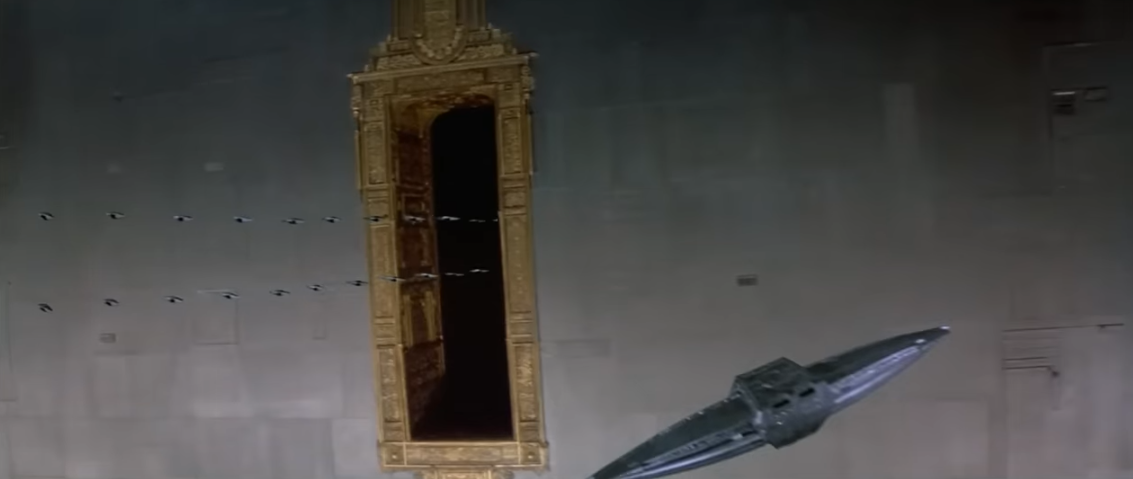
Debe lucir como una versión correcta de la Casa Corrino o el Imperio Galáctico en onda barroco del futuro.

Te equivocas. Hay una canción nueva de Luomo: «yölapsi» (06:47), se estrenó el 28 de mayo de 2026. De hecho, son varias y cada una tiene su portada. Lo extraño es que solo la primera suena a Luomo, vagamente, sin el nivel de producción; tal vez son esbozos que lanza sin compromiso bajo un nombre genérico para los suscriptores.

Las cosas que tiene uno que calarse después de la singularidad. Piensa en un abogado cuya biblioteca cambia de contenido según la hora del día, o un cirujano cuyos instrumentos pierden precisión cuando el hospital está lleno de gente. ¡Imagínese! como dice la señora María.